
%20(2).png)
The first bending machines were developed in the early 1800s and were powered by steam engines. They were used to bend sheet metal for various purposes, for example in shipbuilding and construction. The demand for sheet metal components was boosted in particular by the industrial revolution. In the early 1900s, the first hydraulic bending machines were developed, which were more powerful than steam-powered press brakes and could therefore bend thicker sheets.
The first CNC (Computer Numerical Control)-controlled press brakes were developed in the late 1970s. Initially, however, they were very expensive and were only used by large manufacturers. Gradually, however, the cost of CNC press brakes has come down considerably, allowing them to be used by a wide range of manufacturers, from small workshops to large companies. In addition, automation in the field of press brakes is progressing steadily and allows, for example, automated material handling to reduce the workload of operating personnel.

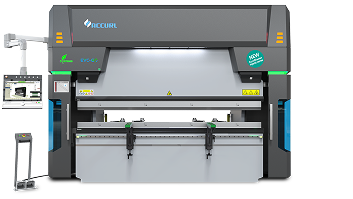
Economical, precise, reliable – a CNC press brake from the EuroMaster series by ACCURL

CNC press brakes from ACCURL offer maximum precision and process reliability, are equipped with high-quality components throughout and can be almost completely automated.
Press brakes differ depending on the function and the drive power of the machine:
They use compressed air to generate the bending force and are generally used for lighter tasks.
These press brakes use a mechanical force to generate energy and apply force to the metal. They are suitable for bending applications with low to medium volumes.
These machines use an electric motor for the drive, which allows for precise control and energy efficiency. Electric press brakes are characterized by low maintenance and quiet operation.
These press brakes use hydraulic fluid to generate power and are capable of exerting high force. They are therefore ideal for bending heavy materials and large material thicknesses.
As a rule, CNC-controlled press brakes are driven by a hydraulic or electric system. Which system is best suited to your requirements can be determined in a needs-based consultation. In addition to the configuration of the drive power, press brakes can also be adapted to individual requirements with various equipment options in order to maximize productivity.
In order to bend a sheet precisely with a press brake, it must first be positioned on the machine and aligned with the backgauge. The backgauge ensures precise positioning of the bending line on the sheet during the bending process. The desired bending angle and radius, the position of the backgauge and other parameters are set in the press brake's control system.

In many cases, the main application of a press brake is air bending (free bending). In this process, the upper tool (punch) presses the workpiece into the opening of the lower tool (die), but not all the way to the bottom of the die. The bending angle is determined by how deep the punch plunges into the die. This allows different angles to be bent without changing tools.
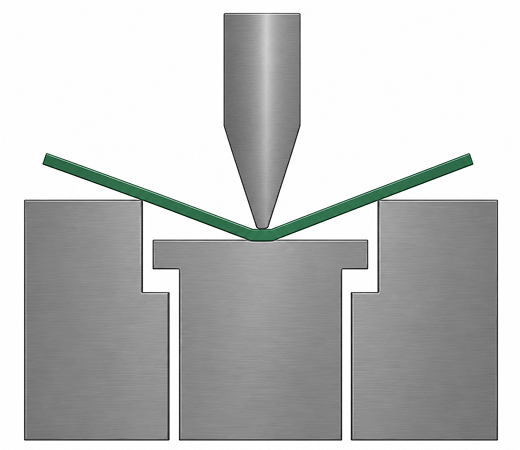
Another bending process is 3-point bending. Here, the punch presses the workpiece through to the bottom of the die. One advantage of this type of bending is the higher precision compared to air bending. However, the process places higher demands on the technology used, in particular the CNC control and the tools, and is therefore more cost-intensive.
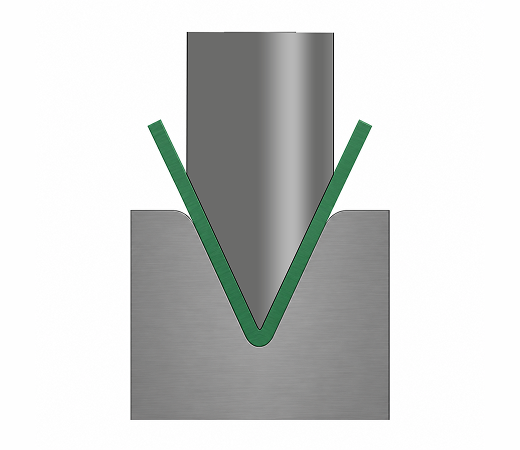
A third process is coining. In this process, the material is pressed into the die until it lies against the walls of the die and takes on its angle. A separate set of tools is required for each angle. As the sheet metal is pressed into the die with great pressure from the punch, the pressing force required is around three times that of air bending.
CNC press brakes are versatile and therefore widely used in different industries, including:

production of body parts, frames, brackets and other components for cars and trucks

production of aircraft components such as fuselage and wings

production of metal cabinets and housings

production of metal parts for buildings and other structures

production of various products, such as household appliances, furniture, medical devices and more

Our application engineers help you select the right machine, tooling, and CNC configuration for your specific requirements.


Get in touch with us!
Messerschmittstraße 3,86825 Bad Wörishofen,Germany
8 a.m. – 5 p.m.
8 a.m. – 3 p.m.
© 2026 Copyright & Page Design by ACCURL Europe - All rights reserved.